Clayton County court serves as the main judicial system for handling legal matters in Clayton County, Georgia. It manages court cases, public records, and legal services through a structured system. Clayton County court GA provides organized court operations, case tracking, and public court records that support transparency and legal order across the county. Clayton County court functions as the central county legal system responsible for handling civil, criminal, family, and traffic-related matters. It operates through a structured judicial system that includes multiple court levels, each assigned specific case types and responsibilities. This structure helps maintain order across all legal proceedings and supports fair case handling. Public court records play a major role in keeping case information available for review, including filings, schedules, and decisions. These records help attorneys, residents, and legal researchers stay informed about ongoing and past cases within the county court system.
Clayton County court GA also provides public court services that support case management and legal documentation for residents and legal professionals. The system includes several courts such as Superior Court, State Court, Magistrate Court, and Probate Court, each serving a different legal function. Through public court access, users can review case details, track hearings, and view legal outcomes. This organized judicial structure improves clarity in legal processes and supports consistent recordkeeping across all court levels in Clayton County. It also helps reduce confusion by separating responsibilities across different courts. Overall, the system strengthens reliability and consistency in local legal operations.
What is the Structure of Clayton County Judicial
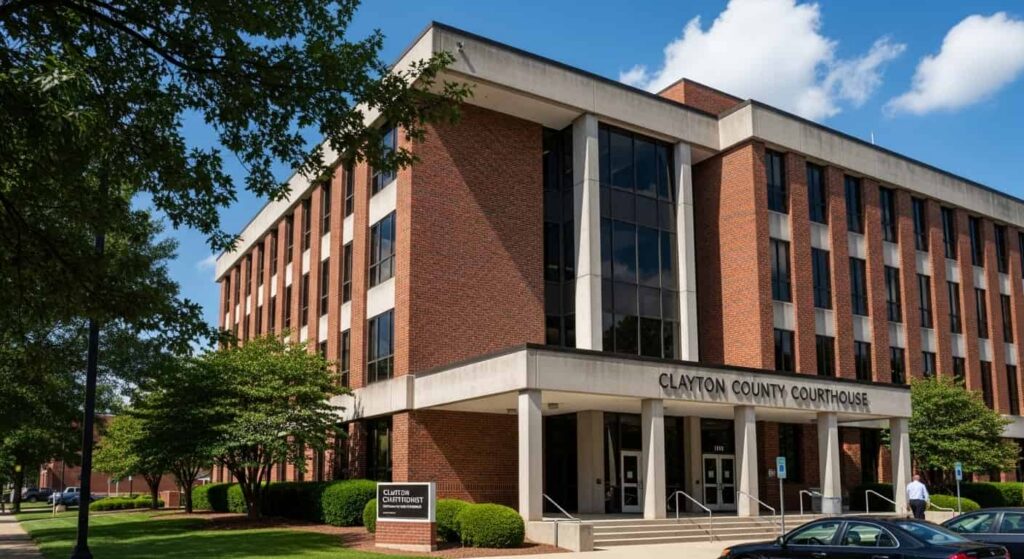
Clayton County judicial system operates as a structured part of the broader Georgia court system. It follows a clear court hierarchy that separates responsibilities across different court levels. This setup helps distribute legal cases based on type, severity, and jurisdiction. Across Georgia, trial courts form the base level of the court system. These courts handle hearings, evidence review, and case decisions at county level. In Clayton County, Georgia, this structure connects local courts with state-level oversight. County courts manage day-to-day legal matters, while state courts maintain consistency in legal interpretation. This connection keeps the judicial process aligned across all counties and supports organized case handling under Georgia law. It also helps ensure uniform application of legal procedures. Each court operates within clearly defined limits to avoid overlap. This structure improves coordination between different court levels.
Superior Court Functions
Superior Court in Clayton County handles the most serious cases within the county court structure. It has authority over major civil disputes and felony-level criminal cases. Superior court decisions carry strong legal weight and shape outcomes in high-level cases. It also deals with cases involving constitutional issues and complex evidence. Judges in this court often oversee long and detailed hearings. The court plays a central role in maintaining legal order at the county level.
- Handling felony criminal cases such as serious theft or assault
- Managing major civil disputes involving large claims or property issues
- Conducting jury trials for complex cases
- Reviewing appeals from lower courts in limited situations
- Handling family law matters like divorce and custody disputes
State Court Responsibilities
State Court in Clayton County focuses on misdemeanor offenses and traffic-related violations. It manages routine legal matters that do not require superior court jurisdiction. This court reduces pressure on higher courts by handling frequent and less complex cases. It also helps keep legal processes efficient for everyday violations. Judges in state court follow Georgia laws for consistent rulings. Many cases are resolved through hearings rather than full trials.
- Processing misdemeanor criminal cases
- Handling traffic violations such as speeding or DUI cases
- Managing civil claims under a set monetary limit
- Conducting bench trials and hearings without juries in many cases
- Supporting quicker resolution for lower-level disputes
Magistrate & Probate Court Roles
Magistrate Court and Probate Court in Clayton County manage specific legal areas within the county system. Each court serves a distinct function for residents. These courts support faster handling of personal and administrative legal matters within the county structure. Magistrate court often provides quick resolutions for minor disputes. Probate court deals with sensitive family and estate matters requiring careful review. Both courts help reduce workload on higher courts while serving daily community legal needs. Magistrate Court handles:
- Small claims disputes
- Landlord-tenant issues
- Arrest and search warrants
- Preliminary hearings for criminal cases
Probate Court handles:
- Wills and estate administration
- Guardianship and conservatorship cases
- Marriage licenses and related filings
- Mental health and involuntary commitment cases
How to Access Clayton County Court Records
Clayton County court records are maintained by the official system of Clayton County Government and can be viewed through clerk-managed services. These records support public records search, case lookup, and court database review for many legal matters handled in the county. Public access rights in Georgia allow people to review many court files, including civil, criminal, traffic, and probate cases. This system keeps legal activity transparent and organized. Still, some records may stay restricted due to privacy laws or sealed court orders. The clerk office manages all official filings, updates, and document storage. Users can review case status, filings, and court actions either online or through courthouse services, depending on availability.
Official site: http://www.claytoncountyga.gov/
Online Case Search Method
Online court records for Clayton County are available through the official county system linked with Clayton County Clerk of Superior Court. Users must follow the correct path to reach the case inquiry system, since it is not visible directly on the homepage. This digital court database helps users perform fast georgia case search without visiting the courthouse.
- Open the official website: http://www.claytoncountyga.gov/
- On the clerk page, find and click: “Online Services”
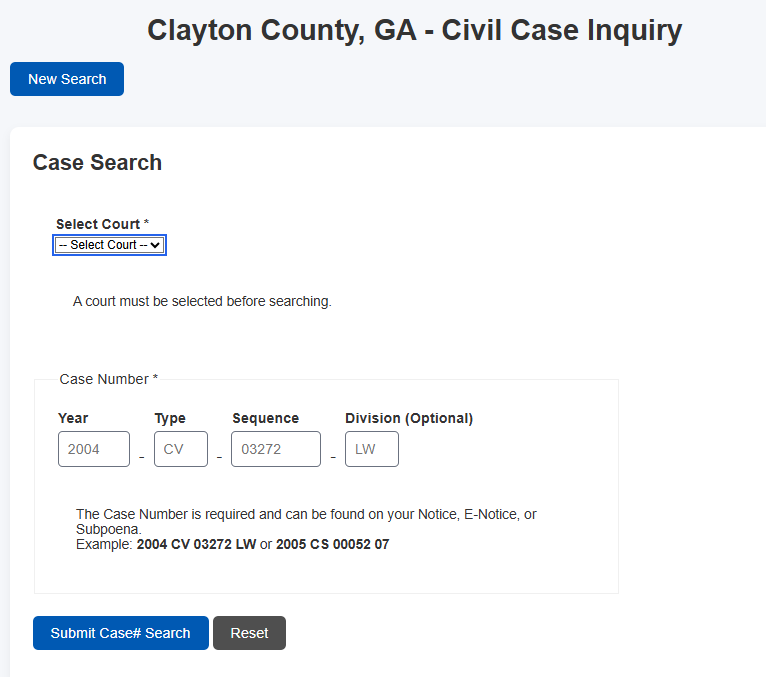
- Inside Online Services, choose: “Case Inquiry” / Case Search
- Enter your search details:
- Full name (name search)
- Case number (case number search)
- Apply filters if available:
- Case type (civil, criminal, probate)
- Filing date range
- Click search and review results:
- Case status
- Hearing dates
- Filed documents summary
In-Person Record Access
Courthouse records office access is managed through the clerk office for full document retrieval. This option works best when online court records are limited or unavailable. Clerk staff help locate records, especially older files or restricted documents. This method gives complete access to official case files.
- Visit the Clayton County courthouse
- Go to the Clerk of Superior Court office
- Provide case number or full name
- Request file review or certified copies
- Pay required document fees if needed
Court Jurisdiction and Case Types
Court jurisdiction defines which court has the legal authority to hear and decide a case. In the Clayton County court system, jurisdiction depends on the type of case, its severity, and the legal scope assigned to each court. Court jurisdiction organizes how legal matters move through the system and prevents confusion between courts. It clearly defines which court handles civil cases, criminal cases, and family law matters within Clayton County. Each court operates within set limits so cases are filed in the correct place from the start. This structure improves efficiency and reduces delays in legal proceedings. Understanding jurisdiction helps residents choose the right court, file accurate documents, and follow the correct legal process without unnecessary complications.
- Defines authority of each court level
- Separates civil, criminal, and family law cases
- Prevents overlap between courts
- Helps users file cases correctly
- Improves case management efficiency
Criminal Case Jurisdiction
Criminal case jurisdiction determines which court handles offenses based on their seriousness. Courts in Clayton County divide criminal matters between felony and misdemeanor levels. Criminal jurisdiction ensures that each offense is handled by the appropriate court based on severity. Felony cases require more formal procedures and are handled by higher courts, while misdemeanor cases are processed more quickly in lower courts. Magistrate courts assist with early-stage procedures like warrants and preliminary hearings. This structure allows the legal system to process cases efficiently while maintaining proper legal standards. It also helps law enforcement, attorneys, and defendants follow a clear process from arrest to final judgment.
- Superior Court handles felony cases and serious crimes
- State Court manages misdemeanor cases and traffic offenses
- Magistrate Court issues warrants and handles preliminary hearings
- Felony cases include major offenses like robbery or assault
- Misdemeanors include minor violations and local offenses
Civil Case Jurisdiction
Civil case jurisdiction applies to disputes between parties involving money, property, or contracts. These cases focus on resolving conflicts without criminal charges. Civil jurisdiction divides cases based on financial value and complexity. Larger disputes are handled by higher courts, while smaller claims are processed in lower courts for faster resolution. This system helps reduce case backlog and keeps proceedings organized. It also ensures that each case receives the correct level of legal review. Civil courts deal with a wide range of issues, including business disputes, property conflicts, and personal injury claims within Clayton County.
- Superior Court handles major civil disputes and large claims
- State Court manages moderate civil cases within set limits
- Magistrate Court handles small claims and minor disputes
- Cases include property issues, contracts, and injury claims
- Focus is on compensation or legal resolution
Family and Probate cases
Family and probate jurisdiction covers personal legal matters such as divorce, custody, and estate cases. These cases require careful review and are handled by specialized courts. Family and probate matters involve sensitive legal issues that affect personal relationships and financial responsibilities. Superior Court manages family law cases such as divorce and child custody, while Probate Court handles estate-related matters like wills and guardianship. This separation ensures that each case is handled by a court with the right expertise. The process supports structured decision-making and protects the rights of all parties involved in Clayton County.
- Superior Court handles divorce, custody, and family disputes
- Probate Court manages wills and estate administration
- Guardianship and conservatorship cases fall under probate
- Marriage licenses are issued through probate court
- Cases involve personal, financial, and family responsibilities
Filing Cases in Clayton County Courts
The court filing process in Clayton County explains how legal cases are officially submitted to the court system. In the Clayton County court system, filing requires proper documents, accurate details, and following required legal filing steps. The court filing process begins when a person submits case documents to the clerk office for review and entry into the court database. This process applies to civil, criminal, and family-related matters across different courts. Each filing must meet basic requirements, including correct forms, filing fees, and supporting documents. The clerk reviews submissions to confirm they follow court rules and then assigns a case number. Once accepted, the case becomes part of the official system and moves forward for hearings or further action.
- Submit completed legal forms to the clerk office
- Provide accurate party names and case details
- Pay filing fees based on case type
- Attach supporting documents or evidence
- Receive a case number after approval
Civil Filing Process
Civil filing process covers disputes involving money, property, or agreements between parties. These cases begin when a plaintiff files a complaint with the court. The civil filing process starts when the plaintiff prepares and submits a complaint that explains the dispute and the outcome requested. This document must include all relevant facts and supporting details. After filing, the clerk reviews the submission and assigns a case number once it meets court requirements. The plaintiff must then arrange for the defendant to receive official notice of the case. This step allows the defendant to respond and ensures the case proceeds under proper legal procedures within Clayton County courts.
- Prepare and file a civil complaint form
- Include dispute details and requested outcome
- Submit documents to the clerk office
- Pay required filing fees
- Serve the defendant with legal notice
Criminal Filing Procedures
Criminal filing procedures begin when charges are formally submitted against a defendant. These cases are usually initiated by law enforcement or prosecutors. The criminal filing process starts after an arrest, citation, or investigation that leads to formal charges. Law enforcement or prosecutors prepare and submit case documents to the court for entry into the system. The clerk records the filing and assigns a case number for tracking. In some cases, magistrate court may issue warrants or conduct early hearings. Once filed, the case proceeds through arraignment and other legal stages based on court procedures in Clayton County.
- Law enforcement files charges or citations
- Prosecutor submits documents to the court
- Clerk records the case and assigns a number
- Magistrate court may issue warrants or hearings
- Case moves through arraignment and trial stages
Public Court Services and Legal Assistance
County legal services in Clayton County provide residents with help for court procedures, filings, and basic legal needs. Through the Clayton County court system, people can use court assistance programs and self-help resources to manage their cases. Public court services support residents who need help with filing documents, checking case status, or preparing for hearings. These services aim to make the legal system easier to use without requiring full legal representation. Many courts offer self-help resources such as forms, instructions, and guidance for common case types. Legal assistance programs may include referrals, limited advice, or help from nonprofit organizations. These services improve access to justice by helping people handle basic legal matters more effectively within Clayton County courts.
Clerk of Court Services
Clerk of Court services handle official records, filings, and case management for court users. These services are managed through the Clayton County Clerk of Superior Court. The clerk office provides essential support for anyone involved in a court case. It manages document filing, record keeping, and case tracking across different court divisions. Residents can request copies of court records, file new cases, and receive updates about hearings or case progress. The clerk office also helps verify that submitted documents meet court requirements. This service plays a key role in maintaining accurate court records and supporting daily court operations in Clayton County.
- Accepts and processes court filings
- Maintains official case records
- Provides certified copies of documents
- Assists with case status inquiries
- Manages court fees and payments
Legal Aid and Support
Legal aid and support services provide assistance for residents who need help with legal issues but may not have private attorneys. These programs connect users with resources for guidance and support. Legal aid services help people understand their rights and prepare for court proceedings. These programs often focus on low-income residents and offer limited legal advice, document review, or representation in certain cases. Support services may include community organizations, legal clinics, and referral programs. Self-help centers also provide basic instructions for common legal tasks. These resources help reduce confusion and make it easier for residents to handle legal matters within the county court system.
- Provides free or low-cost legal assistance
- Offers guidance on court procedures
- Helps with document preparation
- Connects users to legal aid organizations
- Supports self-represented court users
Rules and Court Procedures
Court procedures in Clayton County set the rules for how cases move through the legal system and how people must behave in court. These procedures follow Georgia court system standards, including court rules Georgia and the formal hearing process. Court procedures help keep hearings organized, fair, and respectful for all parties involved. Every person entering a courtroom must follow basic conduct rules such as arriving on time, dressing appropriately, and speaking respectfully to the judge. Clear procedures guide how evidence is presented, how arguments are made, and how decisions are issued. Filing deadlines are also a key part of the system, since missing a deadline can delay or dismiss a case. Understanding these rules helps participants avoid mistakes and ensures that each case proceeds smoothly within Clayton County courts.
- Arrive on time for all hearings and court dates
- Dress in proper and respectful courtroom attire
- Follow judge instructions during the hearing process
- Speak clearly and only when permitted
- Avoid disruptive behavior inside the courtroom
Filing Deadlines and Procedural Rules
Filing deadlines and procedural rules control how and when documents must be submitted in court cases. These rules are part of standard court procedures and must be followed carefully. Each case type has specific timelines for filing documents, responding to claims, and submitting evidence. For example, in many civil cases, a defendant must file an answer within 20–30 days after being served with a complaint. Motions are often required to be filed at least 7–14 days before a scheduled hearing, while responses to motions are typically due within 10–14 days after service. Discovery deadlines, including the exchange of evidence, are usually set by the court and may range from 30 to 90 days or more depending on the case. Missing a deadline can lead to penalties, case delays, or dismissal.
- Submit all documents before the official deadline
- Follow required format for legal filings
- File documents with the correct court office
- Serve copies to all involved parties
- Track deadlines for responses and hearings
Location and Contact Information
Clayton County courthouse location refers to the main court facility where legal cases are filed and heard in the county. The primary courthouse operates under the Clayton County court system and provides essential court address and contact details for public use. The main courthouse for Clayton County is located in Jonesboro, Georgia, which serves as the central hub for court operations. This location handles filings, hearings, and record services for multiple courts, including Superior Court and State Court. Residents can visit the courthouse for in-person assistance, document filing, or case inquiries. It is important to check office hours before visiting, since different departments may have slightly varied schedules. The courthouse staff can assist with general questions, record requests, and filing procedures during business hours.
Courthouse Address and Contact Details
This courthouse provides a central location for legal services, record access, and court-related assistance in Clayton County. Visitors can contact the office for general inquiries, case updates, or filing support during standard working hours. The clerk office handles document submissions, certified copies, and record requests for various case types. It is recommended to confirm timings before visiting, especially on holidays or special schedules. The contact details below help residents reach the correct department quickly for efficient service.
- Address: 9151 Tara Boulevard, Jonesboro, GA 30236, USA
- Phone Number: (770) 477-3300
- Clerk of Court Contact: (770) 477-3395
- Office Hours: Monday to Friday, 8:00 AM – 5:00 PM
- Location Area: Jonesboro, Clayton County, Georgia
Frequently Asked Questions
Clayton County court FAQ covers common questions about court records, filing, and case handling. These answers help users understand basic processes within the Clayton County court system and find quick solutions. This section addresses common court questions related to public records, case lookup, and filing requirements. It helps users get clear answers without searching multiple sources. The FAQs focus on practical steps, online options, and court responsibilities in Clayton County. Each answer explains key points in simple terms so users can take the next step without confusion. The goal is to reduce uncertainty and help users handle legal matters more efficiently. It also provides quick guidance for first-time users of the court system. These answers are based on standard court procedures followed in the county.
How do I search court records in Clayton County?
Court records can be searched through the official county website by navigating to the Clerk of Court section. Users must go to Online Services and select Case Inquiry to begin a search. Enter a full name or case number to locate records. Results usually show case status, hearing dates, and basic details. If online results are limited, records can be requested from the clerk office in person. This process helps users quickly locate available case information. It reduces the need for physical visits in many situations. Accurate search details improve the chances of finding the correct record. Users should double-check spelling for better results. Case numbers provide faster and more precise searches.
Are court records public in Georgia?
Yes, most court records in Georgia are public under state law. This allows people to review civil, criminal, and traffic case details. Some records may be restricted if they contain sensitive information or are sealed by court order. Public access supports transparency and keeps legal proceedings open for review. This system helps maintain trust in the legal process. It allows attorneys and residents to review case information when needed. Access rules may vary depending on the type of record requested. Certain juvenile or confidential cases are not available publicly. Users may need permission for restricted files.
Which court handles my case?
The court depends on the type of case and its severity. Superior Court handles felony and major civil cases. State Court manages misdemeanors and traffic violations. Magistrate Court handles small claims and preliminary matters. Probate Court deals with wills, estates, and guardianship cases. Choosing the correct court helps avoid filing delays. It also ensures the case is processed under the right legal authority. Filing in the wrong court may require refiling and cause delays. Understanding court roles helps improve case handling efficiency. Court clerks can provide basic direction if needed. Legal advice may be required for complex cases.
Can I access records online?
Yes, many records are available through online court systems. Users can search using the county website and access case summaries through the digital court database. Some detailed documents may not be available online and require a request through the clerk office. Online systems provide a quick way to check case updates. They help users monitor case progress without visiting the courthouse. Online access is useful for routine case checks. Availability may depend on the type of case and court system. Some older records may not be digitized. System access may vary based on court policies.
What documents are required for filing?
Filing requires basic legal documents based on the case type. Common requirements include a complaint or petition, supporting documents, and accurate party details. Filing fees must be paid at submission. The clerk reviews all documents before accepting them into the system. Proper documentation helps prevent delays in the filing process. It also ensures the case meets court requirements from the start. Missing documents may result in rejection or delay. Preparing complete files improves filing success and processing time. Each case type may require different forms. Users should confirm requirements before submission.