Clayton County Superior Court handles major criminal and civil cases in Clayton County, Georgia. It serves as a county-level high court under the superior judicial system Georgia framework. This court holds authority over felony trials, serious disputes, and complex legal matters requiring formal judicial review. It also oversees constitutional matters and appeals from lower courts. Judges manage cases through structured hearing procedures and legal filings. Its jurisdiction supports consistency in state-level trial processes across counties. Clayton County Superior Court also plays a key role in maintaining records of case proceedings and issuing legally binding judgments that impact both individuals and organizations. It works in coordination with statewide judicial standards to ensure fair trials and uniform application of Georgia law. The court additionally handles jury trials for serious offenses and provides oversight for equitable resolution in complex civil disputes.
Superior court clayton county ga plays key role in felony prosecution, civil litigation, and family law cases. It handles jury trials, pretrial motions, and final rulings that shape case outcomes. The court supports consistent trial court authority across Georgia counties and maintains structured processing of high-level legal matters within county jurisdiction system operations legal framework. Court records reflect official outcomes for public and legal review. Attorneys present evidence and arguments under formal court rules. Case scheduling and docket management help organize judicial workflow. It also ensures due process by following state procedural laws and evidentiary standards in all proceedings. Appeals from Superior Court decisions are directed to higher state appellate courts for further judicial review.
What is the Role of Clayton County Superior Court
Clayton County Superior Court holds the highest trial court authority in the county-level judicial system, functioning as the central clayton county court authority at the county level. It handles serious criminal and civil matters that require formal jury trials and final rulings. This court operates within the high court authority Georgia structure and serves as a central pillar in the state’s trial jurisdiction system. It also sets legal direction for how major disputes are resolved at the county level. Its decisions often shape how similar cases are handled in other jurisdictions across Georgia. It also oversees pretrial motions, hearings, and procedural rulings that ensure cases follow due legal process before reaching trial. Additionally, it maintains consistent application of Georgia state law across complex litigation, helping ensure fairness and uniformity in judicial outcomes.
Highest Trial Court Authority in Georgia
The Superior Court stands above other trial courts in Georgia’s judicial authority structure. It focuses on cases that involve major legal consequences and complex evidence review. Its position gives it full authority over jury trials and final judgments in serious disputes. This authority helps maintain consistency in how state laws are applied across counties. It also strengthens public trust in formal legal decision-making. Because of this structure, it plays a direct role in shaping legal outcomes that affect individuals, businesses, and public matters. It also ensures that high-stakes disputes are resolved under a single, structured legal process.
- Full control over felony case trials
- Jurisdiction over large civil disputes
- Power to issue binding final rulings
- Authority to review complex legal arguments
Authority Over Felony and Civil Cases
The court manages felony-level criminal cases such as violent crimes, fraud, and major theft. It also handles civil cases involving high financial value or complex legal claims. These responsibilities place it at the center of Georgia’s trial jurisdiction system. Judges review detailed evidence and oversee structured courtroom procedures in each case. Jury panels are often used to determine final outcomes in criminal trials. In addition, judges evaluate evidence, oversee jury proceedings, and apply state law to reach final decisions. This makes the court a key decision-making body within the county judicial system. It also plays a role in ensuring fair treatment for all parties involved in litigation.
Relationship With Lower Courts
Clayton County Superior Court works alongside lower courts such as Magistrate and State Courts. These lower courts handle smaller civil claims, preliminary hearings, and minor offenses. However, they do not hold final authority over major cases. Their role is often limited to early-stage hearings and case screening functions. Instead, they pass serious matters upward through the judicial system. This creates a structured flow within the judicial authority structure, where each court has a defined role. The Superior Court then acts as the final trial-level authority, ensuring consistency and lawful resolution across Georgia’s county court system.
How to Search Clayton County Superior Court Cases Online
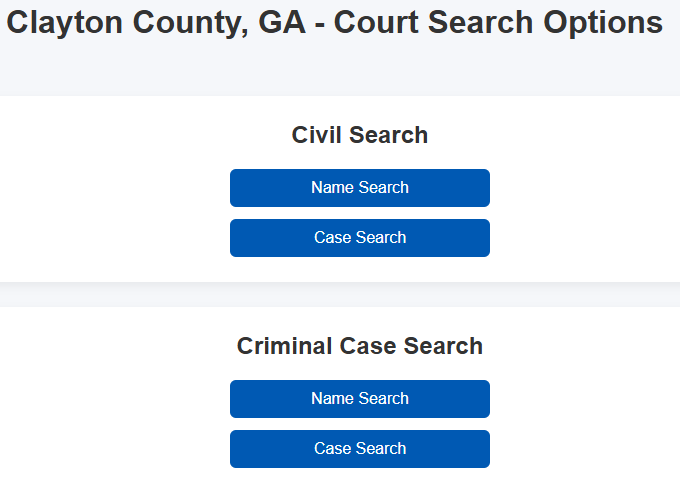
Clayton County Superior Court case search is done through official county and clerk services, not the judge information page shown in your screenshot. The search process follows a structured path inside the county website where users move from courts section to records or clerk services. This system supports court records lookup Georgia for civil and criminal matters. It works through the legal record search system and directs users toward docket-based or name-based searches depending on case availability. Below is the correct step-by-step method used for court case lookup.
Official site: https://www.claytoncountyga.gov/government/courts/superior-court/
Steps to Search
- Open official site: https://www.claytoncountyga.gov/government/courts/superior-court/
- Click on “Courts”
- Scroll down the court services list
- Look for and click “Court Case Inquiry” / “Case Search”
- Choose case type:
- Civil Search
- Criminal Search
- Select search method:
- Name Search (most common)
- Case Number Search (faster if you already have it)
- Enter required details:
- Full name OR case number
- Optional filters (if available)
- Click Search
- View results list
- Case number
- Filing date
- Case status
- Party names
- Click on the case to open full details
Civil Cases in Superior Court Clayton County
Civil cases superior court in Clayton County involve disputes between individuals, businesses, or organizations seeking legal resolution or compensation. These matters fall under civil litigation court Georgia and focus on property issues, contracts, damages, and financial claims. The court processes legal claims through structured procedures involving filings, hearings, and trials. Judges review evidence and ensure fair application of law. Civil disputes are resolved through formal judicial decisions, ensuring legal balance and accountability within Georgia’s civil lawsuit system and dispute resolution court Georgia framework. These cases often involve significant financial stakes and require detailed documentation from both parties. The process supports orderly case handling from filing to final judgment. It also helps maintain consistency in civil dispute outcomes across the county judicial system.
Types of Civil Disputes Handled
Civil cases include various disputes where legal rights or financial interests are affected. The court manages structured resolution under civil litigation court Georgia procedures. These cases require evidence review and judicial decisions. These cases follow legal claims processing rules, ensuring structured evaluation of facts, documents, and testimony before final judgment is issued by the court. Judges carefully assess credibility of evidence before making decisions. Each case type follows different legal standards depending on the dispute category.
- Property ownership and boundary disputes
- Contract breach and business disagreements
- Personal injury compensation claims
- Debt recovery and financial disputes
- Commercial litigation matters
Filing Process in Civil Cases
Civil case filing begins when a plaintiff submits a complaint outlining the dispute and requested relief. The court then processes documents and notifies the opposing party for response. This step starts formal civil litigation court Georgia procedures. The case moves through scheduling, hearings, and pre-trial motions before trial consideration. Judges review filings for legal validity and procedural compliance. This structured system ensures organized handling of disputes within the civil lawsuit system and supports fair dispute resolution court Georgia practices for all parties involved. Proper filing also helps prevent delays and ensures proper case classification. It creates a clear legal record for judicial review throughout the process.
Jury Trials System in Clayton County Superior Court
Jury trials system in Clayton County Superior Court forms a core part of how serious criminal and civil cases are decided. The superior court jury process brings citizens into courtroom trial procedure to evaluate evidence and reach a fair verdict decision system based on facts presented in court. This system ensures that legal outcomes are not based on one opinion alone. It also supports balanced decision-making in high-stakes cases. Jurors listen carefully to all arguments before forming a decision. Their role strengthens fairness in both criminal and civil justice matters within the county court system.
Jury Selection and Trial Setup
Jury selection process begins when eligible citizens are called for jury duty. The clerk of court manages the summons and administrative coordination of jurors, ensuring the process is properly organized before selection begins. Attorneys from both sides question potential jurors to ensure fairness and neutrality. This stage is called “voir dire” and helps form an unbiased jury panel. Once selected, jurors are sworn in and instructed by the judge about their duties. They must remain impartial and follow courtroom instructions carefully throughout the trial. The selection process ensures fairness before the courtroom trial procedure begins. This stage also helps maintain trust in the judicial system by filtering out bias early.
- Random selection of citizens from voter or DMV records
- Questioning by attorneys and judge
- Removal of biased or conflicted jurors
- Final jury panel confirmation
Role of Jurors in Court Cases
Jurors act as neutral decision-makers in both felony and civil trials. They listen to testimony, examine evidence, and assess arguments from both sides. Their role is to decide facts, while judges handle legal rules. In criminal cases, jurors determine guilt or innocence based on evidence beyond reasonable doubt. In civil cases, they decide liability and possible compensation. Their decisions directly influence final case outcomes in the justice system. Jurors must carefully evaluate credibility of witnesses and consistency of presented facts. Their judgment reflects community-based evaluation within the courtroom trial procedure system.
Trial Stages in Superior Court
Courtroom trial procedure in Clayton County follows a structured sequence. Each stage ensures that evidence is presented fairly and reviewed properly. During deliberation, jurors discuss the case in private and reach a unanimous or majority decision, depending on case type. The judge then formally records the verdict in court records. Each stage supports transparency and structured legal evaluation within the jury trials system.
- Opening statements from both sides
- Presentation of evidence and witness testimony
- Cross-examination of witnesses
- Closing arguments
- Jury deliberation and verdict decision
Importance of Jury System in Justice Delivery
The jury trials system strengthens public participation in the justice process. It ensures that verdicts are not decided by judges alone but by community members as well. This supports transparency and fairness in the judicial process. It also helps balance legal authority with citizen involvement in court decisions. It also builds trust in the legal system by allowing ordinary citizens to contribute to major legal decisions. The verdict decision system reflects collective judgment based on evidence, law, and courtroom proceedings, making it a key part of the Superior Court structure in Clayton County. This participation reinforces accountability in felony and civil trials.
Case Filing and Record Structure in Superior Court
Case records Georgia courts are organized through a structured legal documentation system that records every filing, hearing, and ruling in Clayton County Superior Court. The court filing system Clayton County follows strict procedural steps to register civil and criminal matters under official docket tracking system rules. Each case receives a unique identification number that stays active throughout the entire legal process. This system supports accurate case monitoring, record management, and long-term archival of judicial activity within Georgia’s superior court framework. Legal records are created at the moment a case is submitted and continue to expand as hearings, motions, and judgments are added. These records form the foundation of court record management across criminal and civil matters.
Case Filing Process in Superior Court
Case filing begins when a party submits formal legal documents to the clerk’s office. These documents include complaints, petitions, or indictments depending on case type. Once submitted, the case enters the official court filing system Clayton County database and receives a docket number for tracking. After filing, the case becomes part of the case records Georgia courts database. Judges and attorneys use this record for scheduling hearings, reviewing motions, and tracking progress through each stage of litigation.
- Submission of initial legal complaint or indictment
- Verification of documents by court clerks
- Assignment of a docket number
- Entry into electronic case record system
- Notification to involved parties
Docket Tracking and Case Monitoring
Docket numbers function as the main reference point for all court activity. Each entry in the docket reflects a specific event such as hearings, filings, or rulings. This structured system allows real-time tracking of case progress within the court record management framework. Docket entries typically include filing dates, motion updates, hearing schedules, and judicial orders. Users review these entries to follow case movement from filing to final judgment. The system supports transparent case tracking across civil and criminal matters.
Structure of Legal Records in Superior Court
Legal records in Superior Court are divided into criminal and civil categories. Criminal records include indictments, arrest details, plea records, and sentencing outcomes. Civil records contain complaints, responses, motions, and final judgments related to disputes. Public access records allow general viewing of case summaries, while restricted records include sealed documents such as juvenile cases or sensitive evidence. This separation maintains controlled access within the legal documentation system. The structured format supports organized storage and retrieval of court data across Georgia’s judicial network, ensuring consistent record handling for both civil and criminal proceedings.
Location and Contact Information
Clayton County Superior Court address is located in Jonesboro, Georgia, serving as the main courthouse for major civil and felony matters. The court location Clayton County Georgia supports judicial operations for filing, hearings, and case records. It functions as the central legal office for county-level high court proceedings. Visitors reach the courthouse through Tara Boulevard, which connects major transport routes. The facility supports public legal services, case inquiries, and document handling within Georgia’s superior court system for civil and criminal matters.
Courthouse Location Details
Clayton County Superior Court sits in Jonesboro, Georgia, and serves as the main judicial center for county-level cases. The courthouse handles civil filings, felony hearings, and official record services. It is positioned near major road networks, making it accessible for visitors and legal professionals. Parking areas are available near the main entrance for public use. Security screening is required before entry, and all visitors must follow courthouse access rules during operating hours for safety and proper court management procedures.
- Address: 9151 Tara Blvd, Jonesboro, GA 30236
- Contact Number: (770) 477-3385
- Office Hours: Monday–Friday, 8:00 AM – 5:00 PM
- Website: https://www.claytoncountyga.gov/government/courts/superior-court/
Frequently Asked Questions
clayton county superior court FAQs help users understand common court system questions related to case lookup, record access, and judicial process clarification. These FAQs cover felony searches, civil record availability, record retention time, and jury verdict access. The court system questions often arise from public interest in legal record access FAQ procedures and Georgia court case tracking. Answers are based on general court practices within Georgia’s superior court system. This section explains how records are stored, what can be viewed online, and how users can request official case details through clerk offices or authorized judicial record systems in Clayton County.
How do I find a felony case?
Felony case searches in Clayton County Superior Court are handled through official court databases and clerk office records. Each case is assigned a unique docket number, which helps track all filings and hearings. Users can search by defendant name or case number depending on system availability. Some details are public, including charges, hearing dates, and final judgments. However, sensitive documents may be restricted. Clerk offices provide assistance for official requests, ensuring accurate access to felony case records within Georgia’s court system.
Are civil cases public?
Civil cases in Georgia are generally considered public records under the state court system. These cases include disputes related to contracts, property, damages, and financial claims. Most filings, motions, and final judgments can be viewed through official court portals or clerk office requests. However, certain documents may be sealed if they involve private financial data or sensitive personal information. Public access supports transparency in the civil litigation process while still protecting restricted materials based on court orders or legal privacy requirements.
How long do court records stay available?
Court records in Clayton County Superior Court are typically maintained for long-term or permanent storage within Georgia’s judicial system. Recent records are available digitally, while older cases may be archived in physical or electronic format. Users can request archived files through the clerk office if needed. Availability depends on record type and case category, but most civil and criminal records remain accessible for legal reference. This long-term storage supports consistent legal record access FAQ procedures across the state court network.
Can jury verdicts be accessed online?
Jury verdicts in Georgia courts are often available through official online case tracking systems. These records show final outcomes of criminal and civil trials, including guilty or not guilty decisions in felony cases. Civil verdicts may include liability findings and awarded damages. However, jury deliberation details remain confidential and are not published. Online systems typically provide docket updates and final judgment summaries. This access supports transparency in court reporting while protecting private jury discussions within the judicial process framework.
Can I request certified copies of court records?
Certified copies of court records can be requested through the Clayton County Superior Court clerk office. These copies are official legal documents used for legal proof, identification, or court-related needs. Requesters must provide case details such as docket number, party names, or filing date. A small fee is usually required for processing and certification. Requests can be made in person or through mail depending on court rules. Processing time may vary based on record type and workload within the court administration office.