Clayton county public records serve as an official system that stores and provides government-held information for residents, legal professionals, and businesses. These records form part of the georgia public records framework, which supports transparency and accountability in local governance. Through the public records access system, users can review official documents related to court activity, property details, and administrative actions. This system supports lawful information sharing under regulated conditions set by county authorities. It also helps maintain consistency in how government data is recorded and preserved.
Clayton County operates a structured public information framework that allows government document access through approved channels. This system helps maintain an official record database where verified data is stored for legal and civic use. The county transparency system plays a key role in making information available in a controlled and organized manner. Over time, digital tools have improved how these records are managed, making retrieval faster and more consistent for public and legal requirements. It also supports coordination between different county departments handling legal and civic documentation. The system reduces duplication and improves accuracy in stored records.
What Public Records Mean in Clayton County
Clayton county public records refer to official documents created, received, or maintained by county agencies during public service operations. Under Georgia public records law, most government documents are considered part of the public domain unless restricted by legal exemptions. These records support accountability and provide structured information about county decisions, legal matters, and administrative actions. Public court records clayton county court georgia form a major part of this system and include case files, rulings, and filings processed through the judiciary information system. Alongside court data, administrative files such as permits, licenses, and county correspondence also fall within the official document archive. Each record follows a legal record classification method that determines how it is stored, reviewed, and maintained for long-term use.
Categories of Records in Clayton County
Clayton County organizes its data into clear categories to support order and consistency within the public records framework. Each category serves a different function and reflects specific county operations. The structured format allows easier sorting within the official document archive. These categories form part of the legal record classification system used across departments. The judiciary information system plays a central role in organizing court-related data, while administrative departments manage non-judicial files. Together, these records create a structured data environment that supports consistent documentation across county operations.
Main categories include:
- Court records: Civil disputes, criminal cases, traffic violations, and hearing outcomes
- Civil records: Property disputes, contract matters, and non-criminal filings
- Criminal records: Arrest data, charges, indictments, and sentencing details
- Administrative files: County meeting notes, permits, and departmental reports
Public vs Restricted Document Classification
Not all Clayton county public records are fully available for review. Georgia law separates public documents from restricted files based on privacy, security, and legal protection requirements. Public court records clayton county georgia are generally available for viewing, but sensitive data may be partially removed or sealed. This classification system ensures that sensitive information remains protected while maintaining transparency where possible. Legal record classification rules help determine what data can be shared and what must remain limited. This balance supports both public accountability and individual privacy rights.
Restricted documents often include:
- Juvenile case files
- Sealed court orders
- Confidential personal identifiers
- Ongoing investigation records
Role of County Departments in Record Maintenance and Storage Structure
Clayton County departments play a direct role in managing and preserving public records. Each department contributes to the official document archive by submitting, updating, and maintaining records related to its function. The judiciary information system handles court-based data, while administrative offices manage operational files. Records are stored using a structured data classification system that organizes information by type, date, and department source. This system improves consistency across the county and reduces duplication in record storage. Digital databases now support much of this structure, allowing faster sorting and improved long-term preservation.
- Maintaining accurate record entries
- Updating case and administrative files
- Organizing documents by legal category
- Supporting structured storage within digital systems
How to Search Clayton County Public Records
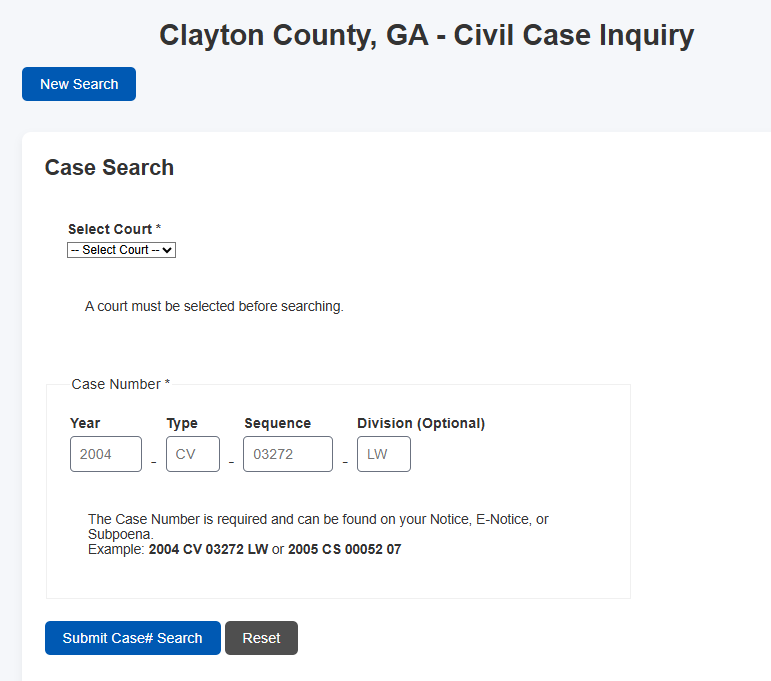
Clayton county public records are searched through the county’s official online system, which routes users to court and administrative databases. The process starts from the main government website and moves into the online services section. From there, the Court Case Inquiry tool provides direct entry into the judiciary information system. Users can then perform a clayton county public records search using either a name-based query or a case number for precise results. This system is designed to organize public court records clayton county georgia in a structured way, allowing fast retrieval of case details, filings, and status updates through the official record retrieval system.
Official site: https://www.claytoncountyga.gov/
Open the official website
- This homepage acts as the main entry point for all public service tools, including court-related services and online systems.
- Start by visiting the official Clayton County Official website: https://www.claytoncountyga.gov/
Select “Online Services”
This section contains all digital tools connected to county systems, including court and records access tools. From the homepage menu:
- Click on Online Services
- Open “Court Case Inquiry”
- Select Court Case Inquiry
Choose search method
Case number search provides the most accurate output in the record retrieval system. The system allows two main search options:
- Name Search – enter individual or business name
- Case Number Search – enter exact case ID for precise results
Review search results
This works as part of the official database navigation system. After submitting the query:
- A list of matching cases appears
- Click on any result to view details
- Information may include case status, filings, and court type
Record structure
This structure helps organize all clayton county public records in a consistent format for easy lookup. Records shown in the system are indexed using:
- Party names
- Case numbers
- Filing dates
- Court division details
Civil Records Archive and Case Documentation
Clayton county civil records form part of the official civil records archive used to store non-criminal legal matters handled by county courts. These records include lawsuits, property disputes, contract issues, and other civil filings processed through the court system. The civil records archive is structured under a legal record classification system that organizes every case into a searchable format. Court case documentation is stored in a controlled database, allowing legal professionals and the public to review case progress, filings, and final judgments in an orderly manner.
Civil Case Categories in Clayton County
Clayton County civil cases are divided into structured categories based on the type of legal dispute. Each category is recorded in the civil records archive under the court case documentation system. These classifications help courts manage different dispute types efficiently while maintaining accurate legal records. Every case is assigned a unique identifier and stored for future reference. The system supports both active and closed cases, ensuring all civil matters remain traceable within the official county database. Main civil case types include:
- Contract disputes between individuals or businesses
- Property ownership and boundary disagreements
- Personal injury and negligence claims
- Small claims involving limited financial amounts
- Family-related civil disputes handled outside criminal law
Filing Process for Civil Records
The civil filing process in Clayton County follows a structured legal workflow that ensures every case, including marriage and divorce records is properly recorded in the civil records archive. A complaint is first submitted to the clerk’s office, where it is reviewed and assigned a case number. The case is then entered into the court case documentation system. After filing, legal notice is issued to involved parties, and hearings are scheduled. Each step is recorded in the system to maintain accuracy, transparency, and proper tracking of all civil proceedings.
- Submission of civil complaint to court clerk
- Assignment of official case number
- Entry into civil records archive system
- Legal notice served to defendant
- Court hearings scheduled and recorded
- Final judgment documented in system
Record Availability Timeline and Access Structure
Civil records in Clayton County are organized based on case status and availability stage. The civil records archive separates data into active, closed, and archived categories. Active cases are updated regularly as court proceedings continue. Closed cases contain finalized judgments and remain available for reference. Archived records store older case files in long-term storage systems. Access depends on legal classification rules, and some sensitive documents may be restricted under privacy or court sealing requirements within the legal record classification system.
Availability stages:
- Active cases updated during ongoing hearings
- Closed cases stored after final judgment
- Archived cases preserved for historical reference
- Restricted records limited due to legal privacy rules
Court Case Documentation Structure
Court case documentation in Clayton County follows a standardized system that ensures every civil record is properly organized within the civil records archive. Each case file includes structured data points that help identify, track, and retrieve legal information efficiently. This system supports consistency across all civil filings and improves record management across departments. It also allows users to review case history, legal actions, and final outcomes through the official court database without confusion or data mismatch.
Documentation includes:
- Unique case number and filing date
- Names of involved parties
- Legal motions and submitted documents
- Hearing dates and proceedings
- Final court judgment and rulings
Government Records Database and Public Information Access
Georgia public records are maintained under a structured system that allows public visibility of government activity through regulated channels. The government records database stores official documents created by state and county agencies during administrative and legal operations. A public document access system supports this structure by organizing data for review under open records law requirements. This framework helps maintain transparency in government actions while keeping sensitive information protected through legal classification rules.
Role of Public Records Laws in Georgia
Georgia follows an open records law that governs how government information is created, stored, and shared with the public. This law supports transparency act principles by allowing citizens to request and review official documents from public agencies. The law applies to county offices, courts, and state departments that maintain administrative records and legal files. The government records database operates under these rules to ensure accountability in public operations. Agencies must respond to requests within a defined timeframe unless the information is legally restricted. This structure helps maintain a balance between public data system accessibility and privacy protection. It also supports consistent handling of georgia public records across different departments and agencies.
What Government Records Include
The government records database contains a wide range of documents produced during official operations. These records reflect administrative, legal, and financial activities within public institutions. Each document is stored in a structured format inside the public document access system, allowing organized retrieval and classification. These records form part of the broader georgia public records framework and are classified based on legal record type and agency source. The public data system ensures each record is stored in a consistent and searchable format for future reference.
- Administrative records such as policies, notices, and internal reports
- Court and legal filings from county and state judiciary systems
- Property and tax-related documentation maintained by local agencies
- Meeting minutes from public boards and commissions
- Licensing and permit records issued by government departments
Digital Transformation of Government Records
The government records database has shifted from paper-based storage to advanced digital systems across Georgia. This transition supports faster processing, improved accuracy, and easier retrieval of public documents. A modern public document access system now allows users to search, filter, and request records electronically instead of relying on manual filing methods. Digital transformation also improves record classification under open records law requirements. Documents are indexed by category, date, and department, making the public data system more efficient. Automated storage reduces duplication and improves long-term preservation of administrative records. These advancements strengthen transparency act compliance while supporting reliable access to georgia public records across government departments.
- Electronic storage of administrative and legal records
- Faster retrieval through indexed search tools
- Reduced reliance on physical archives
- Improved accuracy in record classification
Criminal Record Data and Background Information Access
Clayton county criminal records form part of the official criminal record data stored by law enforcement and court systems. These records include arrest details, charges, court outcomes, and offense history recorded during criminal proceedings. A background records search uses this structured criminal database to provide information for legal, employment, and verification purposes. The system operates under strict legal rules to balance public safety needs with privacy protections, ensuring law enforcement records remain accurate, classified, and properly managed.
What Criminal Records Include in Clayton County
Criminal records in Clayton County contain structured information generated through police activity, court cases, and correctional systems. These records are stored in a centralized criminal database that tracks each stage of a case from arrest to final judgment. Law enforcement records are organized to support identification, legal review, and historical tracking of offenses. Each entry is indexed within clayton county criminal records using case numbers and personal identifiers. This structure allows authorities and authorized users to retrieve accurate data through structured search systems.
- Arrest records with date, time, and location
- Formal charges filed by prosecutors
- Court hearings and case proceedings
- Convictions, dismissals, or acquittals
- Sentencing and probation details
- Offense history linked to prior cases
Who Can Access Criminal Records and Why
Access to criminal record data is controlled under Georgia law and depends on the purpose of the request. Some records are open for public viewing, while others are restricted due to privacy or ongoing investigations. A background records search is commonly used by employers, legal professionals, and government agencies for verification purposes. Public access to criminal database information is limited when records involve sensitive data, sealed cases, or juvenile matters. This controlled access ensures law enforcement records remain secure while still supporting transparency where legally permitted.
- Law enforcement agencies for active investigations
- Courts for legal proceedings and case review
- Employers for background verification (limited scope)
- Attorneys handling criminal defense or prosecution cases
- Individuals requesting their own record copies
How Criminal Records Are Updated
Clayton county criminal records are continuously updated as cases move through the justice system. Law enforcement agencies, courts, and correctional departments contribute data to ensure accuracy. Each update is recorded in the criminal database to reflect real-time case progress. This structured process ensures criminal record data remains current and consistent across all departments. Updates are verified before being stored to prevent errors in law enforcement records.
- Police submit arrest data after incident reporting
- Courts update charges, hearings, and rulings
- Correctional facilities report sentencing and custody status
- Records are indexed and synchronized in the central system
Privacy Rules and Legal Limitations
Criminal records in Clayton County are subject to strict privacy laws that limit full public disclosure. Not all data within the criminal database is available for general viewing. Sensitive information is protected under Georgia privacy regulations and court sealing rules. These limitations ensure that background records search results remain legally compliant while protecting individual privacy. The system balances public safety needs with confidentiality requirements, ensuring clayton county criminal records are used responsibly and within legal boundaries.
- Sealed or expunged records not visible to public searches
- Juvenile criminal records protected from disclosure
- Ongoing investigation details restricted from release
- Personal identifiers partially redacted in public reports
Location and Official Contact Information
Clayton county public records office provides in-person support for individuals who cannot use online systems for document searches. The record access office is mainly operated through the county clerk office located inside the courthouse complex. This location serves as the central point for court-related records, civil filings, and administrative document requests. Visitors can submit requests, verify case details, and obtain certified copies directly from staff. The public information desk also assists with guidance on record types, required forms, and proper request procedures.
County Clerk Office
The county clerk office is located inside the main courthouse complex and serves as the primary in-person point for clayton county public records requests. It handles civil, criminal, and court-related documentation. The office provides assistance for certified copies, case verification, and record lookup support. All requests are processed after identity verification and applicable fees. This location connects directly to the official court database system used for maintaining legal records and filings.
Official Details:
- Address: 9151 Tara Boulevard, Jonesboro, GA 30236, USA
- Contact Number: (770) 477-3405
- Website: https://www.claytoncountyga.gov/
- Office Hours: Monday to Friday, 8:00 AM – 5:00 PM
Public Information Desk and Record Services
The public information desk inside the record access office supports visitors with general inquiries about court records and administrative files. It guides users on how to request documents, which forms are required, and where to submit them. The system is designed to support both walk-in users and formal written requests. Staff also help identify the correct department for civil, criminal, or property-related records within the county system. Services available:
- Assistance with record request forms
- Guidance on court case lookup procedures
- Support for certified document requests
- Direction to correct department offices
Frequently Asked Questions
Clayton county public records search FAQ explains how users can request government documents under georgia public records questions framework. These FAQs help clarify record availability rules, search methods, and legal limits. Public access laws allow many court and administrative records to be viewed, but some files remain restricted due to privacy or court orders. Users often search for court record queries, processing time, and online access options. This section provides clear answers about document search clarity and how different record types are handled in official county systems. It also helps users understand how records are classified before release. This improves accuracy when searching official databases.
What records are publicly accessible in Clayton County?
Clayton county public records search allows access to many government documents that fall under public access laws in Georgia. These include civil cases, property records, traffic violations, and basic court filings. Administrative reports and marriage records are also available in most cases. However, access depends on record classification rules. Some files may be partially hidden or limited due to legal protection. The system separates public and restricted data to maintain transparency while protecting sensitive information within official county record systems. Users can verify details through court or clerk databases. Availability may also depend on case status.
How long does it take to retrieve court records?
Court record queries in Clayton County vary depending on how the records are stored in the system. Digital records are usually available immediately through online databases, while older files stored in archives may take additional time. Requests made at the clerk office are often processed within one to two business days. Complex or historical records may require manual retrieval. The timeline depends on record type, case status, and whether the document is part of active or archived court systems. High request volume can also affect processing speed. Some cases may need verification before release.
Are all criminal records available to the public?
Clayton county public records search FAQ shows that not all criminal records are open to public viewing. Some arrest records and case outcomes are accessible, but sensitive information is restricted under Georgia law. Juvenile cases, sealed records, and expunged files are not available for general search. Ongoing investigations are also protected. This separation ensures public access laws maintain safety and privacy while still allowing limited criminal data to be viewed through official law enforcement and court systems. Access rules are regularly updated based on legal changes. Proper authorization is required for restricted data.
Can records be requested online in Georgia?
Georgia public records questions often include online access availability. Many Clayton County records can be requested or searched through digital systems, including court and property databases. Online platforms allow users to view basic case information and file requests. However, some documents still require in-person submission or identity verification. Certified copies and restricted files cannot always be delivered digitally. The system supports both online convenience and secure manual processing depending on document type and legal requirements. Users should confirm eligibility before submitting requests. Some services may require account registration.
What information is restricted under law?
Record availability rules in Georgia limit access to certain types of sensitive information. Restricted data includes juvenile records, sealed court cases, and ongoing investigations. Personal identifiers such as Social Security numbers are also protected. Some court orders and confidential legal documents are not released to the public. These restrictions exist to maintain privacy and legal integrity while still allowing access to general government records through official public access laws and structured county record systems. Legal exceptions are applied based on case type and court decisions. Unauthorized access is not permitted under state law.